July 7, 2026
Canon AE-1: The Camera That Made Film Photography a Revolution
The Canon AE-1 is the world's most beloved film SLR — and for good reason. Whether you're just starting out or adding a legend to your collection, here's everything you need to know before you buy.
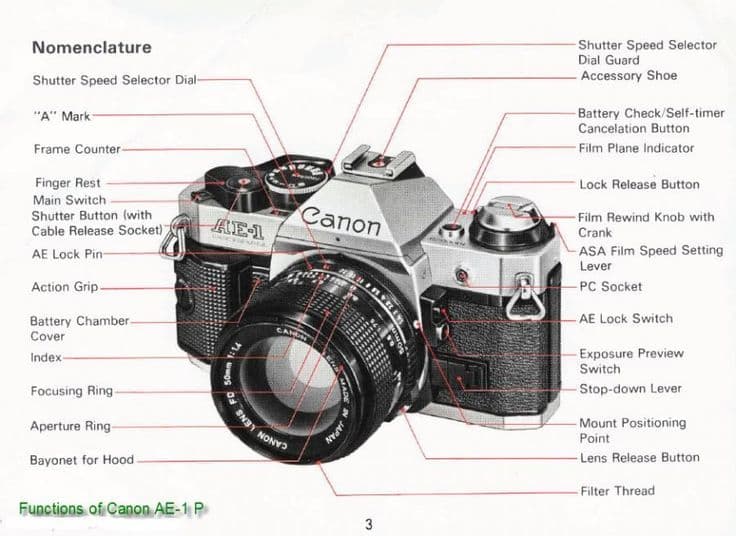
Some cameras are tools. The Canon AE-1 is a piece of history you can still load with film and shoot today. Introduced in 1976, it was the camera that democratized SLR photography and turned millions of ordinary people into serious shooters. Five decades on, it remains the world's most sought-after film camera — and the reasons are not nostalgic. They're practical.
A Camera That Changed Everything
Before the AE-1, 35mm SLRs were either expensive or intimidating. Canon changed that with a single audacious move: pair an accessible price point with a built-in microprocessor — a first for any SLR at the time. Coupled with the legendary "You can do it" ad campaign in North America, the AE-1 sold over five million units in a decade and made film photography accessible to an entirely new generation. It put serious cameras in the hands of students, travelers, and everyday people who had never considered themselves photographers.
Today, those same cameras appear in vintage shops and on second-hand marketplaces, fetching prices that would have seemed unthinkable fifteen years ago. The analog revival is real, and the AE-1 sits at the center of it.
What Makes the AE-1 Work
At its core, the AE-1 is a shutter-priority automatic SLR. You set the shutter speed — anywhere from 1 second to 1/1000th — and the camera selects the appropriate aperture. It is simple, responsive, and perfect for building intuition about exposure without overwhelming a beginner with variables. Pair it with the standard Canon FD 50mm f/1.8 lens, and you have a system that is both forgiving and genuinely capable.
One important note: the AE-1 is electronically dependent. Unlike a fully mechanical camera, it requires a 4LR44 or equivalent battery to function at all. Keep a spare in your camera bag — dead battery means no shutter.
AE-1 vs. AE-1 Program
The AE-1 Program, released in 1981, adds a fully automatic Program mode where the camera controls both shutter speed and aperture simultaneously. If you are choosing between the two and prices are similar, the Program is the better buy for beginners — that extra mode removes one more variable while you are learning. That said, the original AE-1 is no less capable as a camera. If you find one in good condition at a fair price, there is nothing to regret.
What to Check When Buying Used
Every AE-1 you encounter is at minimum forty years old. That is not a problem — these cameras were built to last — but you need to know what to look for before handing over your money.
Sticky mirror syndrome: The foam damper on the mirror box deteriorates over time and can cause the mirror to return slowly or stick mid-cycle. To test, remove the lens, set the camera to Bulb, fire the shutter, and watch the mirror snap back cleanly and quickly.
Shutter squeak: A squeaking or grinding sound during the shutter cycle means the mechanism needs lubrication. This is a fixable issue, but it should factor into what you pay.
Light seals: The foam seals that run around the film door channel break down with age and can cause light leaks on your film. Open the back of the camera and inspect the channel around the perimeter. If the foam looks crumbly, compressed, or absent in spots, it needs replacing — a straightforward fix that costs very little.
At Silver Cam, we inspect every AE-1 before listing it for sale, and we offer repair and service for cameras that need attention. If you have an AE-1 sitting in a drawer that you want evaluated or sold, we can help with that too.
Which Film to Start With
Keep it simple. Kodak Gold 200 and Fujifilm 200 are forgiving, widely available, and perform beautifully in daylight. If you want richer color rendering or shoot in mixed light conditions, Kodak Ultramax 400 or Fuji Superia 400 gives you more exposure latitude and handles lower light better.
Resist the temptation to start with niche or exotic stocks. Get comfortable with a standard ISO 200 or 400 film first, learn how the camera responds, and then experiment.
The Verdict
The Canon AE-1 earned its legendary status the hard way — by being genuinely excellent. It is responsive, reliable when properly maintained, and the images it produces carry a warmth and texture that no digital filter has ever fully replicated. The sheer physicality of film photography — the weight of the camera, the deliberateness of each frame, the anticipation before you see the results — changes how you shoot.
If you have been thinking about getting into film, the AE-1 is the camera that will make you glad you did.